ISO 14607:2024 Annex E – Cohesion testing*
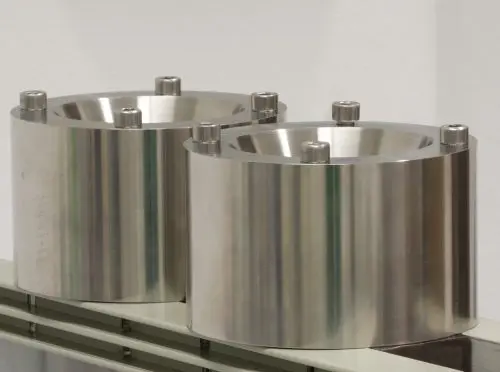
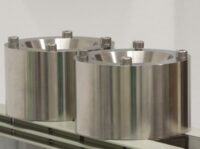 We offer cohesion testing of silicone gel according to ISO 14607:2024 Annex E. In this test, only the filling is examined, not the shell. The silicone filling material is poured into a funnel with standardized dimensions and surface roughness. The gel is allowed to flow freely through the funnel’s lower opening for a duration of (30.0 ± 0.1) minutes.
During the test, it is observed whether the flowing filling material separates from the remaining volume in the funnel. If the material remains cohesive as a whole, the length of the portion hanging below the funnel is measured. We would be happy to provide you with a quotation for this test.
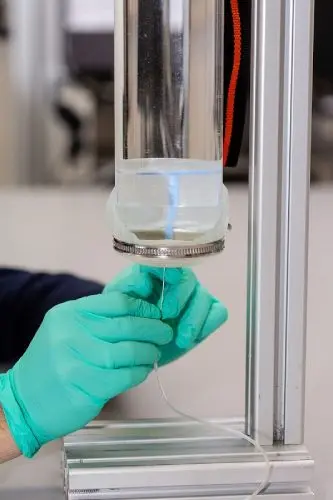
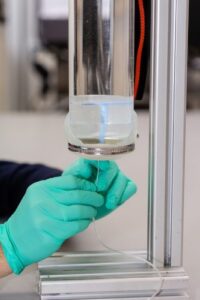 Annex D of ISO 14607:2024 describes the testing of the injection site of fillable tissue expanders (breast implants). The injection site is repeatedly pierced at the same spot with a needle while a water column exerts pressure on the passage.
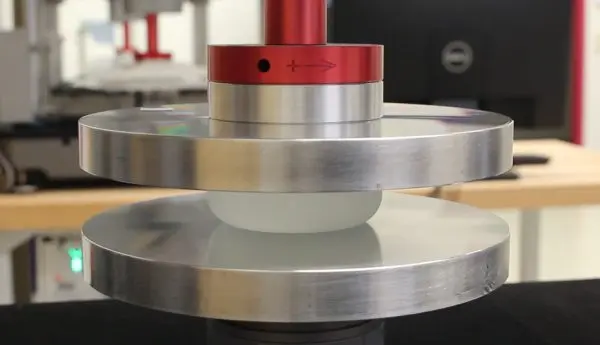
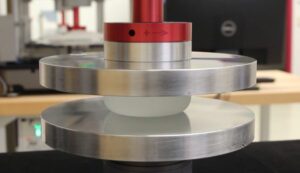 ISO 14607:2024 Annex C.3 and the document Docket No. 2004D-0124 from the U.S. Food and Drug Administration (FDA) describe fatigue tests on breast implants aimed at developing a Wöhler (S–N) curve. Unlike the fatigue tests under shear stress according to ISO 14607, the implants in the FDA guideline Docket No. 2004D-0124 are subjected to cyclic compressive loading. Sinusoidal load cycles with defined upper and lower loads are applied up to a run-out level of 6.5 million cycles. We offer this test together with static rupture tests according to ISO 14607:2007.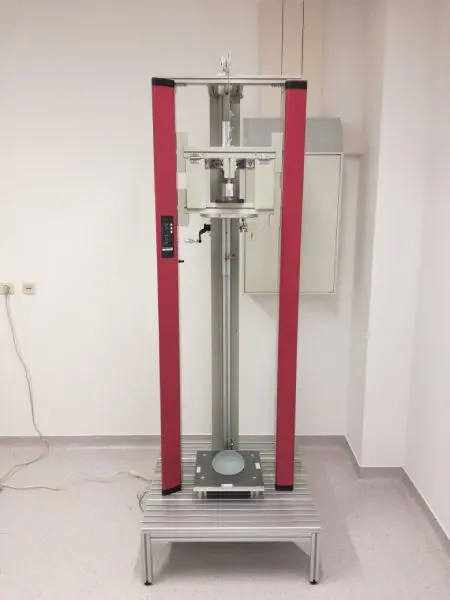
 For the impact test according to ISO 14607:2024 Annex C.2, INNOPROOF has developed and built a custom drop rig that ensures a standard-compliant test. Depending on the mass and projection height of the breast implant, the required drop height is calculated. A weight of 4.4 kg is held by an electromagnet, and the drop height is set using a measuring device. The test specimen is placed centrally on the test table. When the electromagnet is switched off, the weight is released, initiating the impact.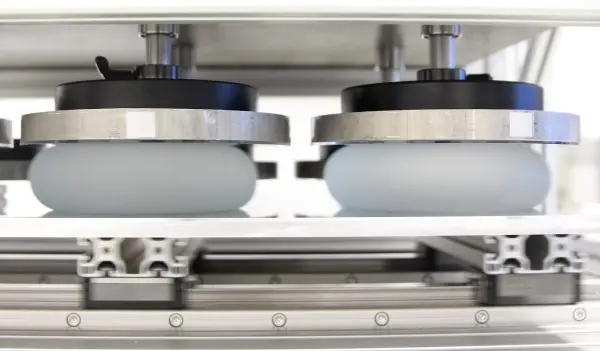
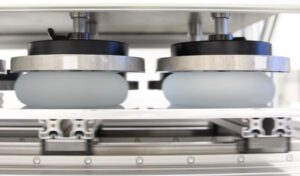 ISO 14607:2024 describes in Annex C.1 the fatigue testing of breast implants under shear stress. The implant is placed between two horizontally arranged plates, and a static load of 50 N per implant is applied. Using an eccentric drive, one of the plates is moved back and forth, applying shear stress to the implant. The test is conducted over 6.5 million cycles at a frequency of 3.33 Hz. Afterwards, an optical rupture inspection is performed.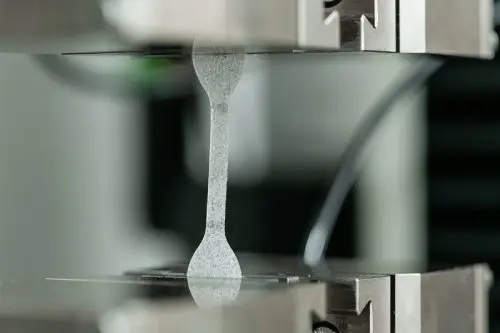
 As part of our testing services for breast implants, we offer, among other things, tests to assess the integrity of the shell in accordance with ISO 14607:2024, Annex B. These include tests of the shell’s elongation, measurement of tensile set after sustained elongation, and testing of seam strength.