
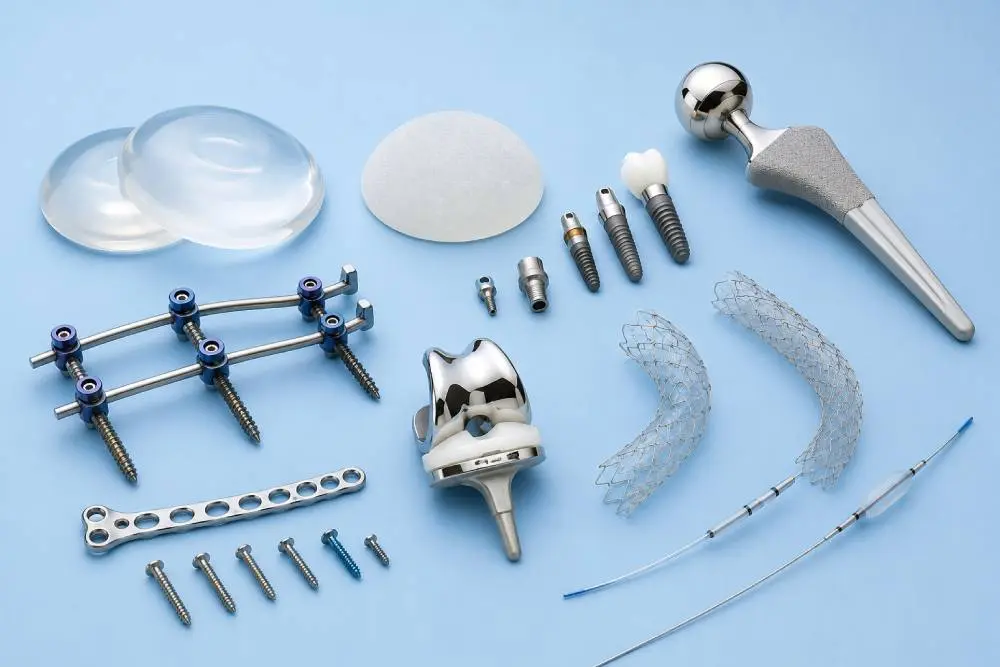
Medical Device Testing for Implantable Medical Devices

At INNOPROOF, we specialize in the preclinical mechanical testing of implantable medical devices. As an accredited testing laboratory, we support manufacturers worldwide with reliable testing services designed to ensure safety, performance, durability, and regulatory compliance according to international standards.

With extensive expertise in medical technology and biomechanical testing, we help our customers bring innovative and safe medical devices to market efficiently and confidently.

Medical device testing

Our Medical Device Testing Services

We perform mechanical and material-related testing for breast implants to assess durability, integrity, and long-term performance. Testing programs may include fatigue testing, shell integrity analysis, and evaluation of mechanical behavior under cyclic loading conditions.
For dental implant systems, we conduct static and dynamic fatigue testing according to applicable ISO standards. Our testing services help manufacturers evaluate implant strength, stability, and long-term resistance to mechanical stress in oral applications.
Hip implant testing includes wear simulation, fatigue testing, and mechanical strength analysis of implant components. We assess the long-term performance of hip prostheses under physiological loading conditions to support product safety and durability.
We provide mechanical testing for knee implant systems, including fatigue, wear, and endurance testing. Our laboratory evaluates implant behavior under repetitive motion and load cycles to simulate long-term clinical use.
Shoulder implant testing focuses on the mechanical stability and functional performance of implant systems. We conduct customized testing procedures to assess durability and reliability under realistic biomechanical conditions.
Our spinal implant testing services include static and dynamic compression, torsion, and fatigue testing according to international standards. We support manufacturers of spinal fixation systems, cages, rods, screws, and motion-preserving implants.
We test trauma and osteosynthesis implants such as bone plates, screws, nails, and fixation systems to evaluate their mechanical strength and fatigue resistance. Testing helps ensure reliable stabilization performance during the bone healing process.
For bone cement products, we perform mechanical characterization and material testing to assess properties such as compressive strength, curing behavior, and long-term stability.
Implant coating evaluations include adhesion testing, wear analysis, and surface characterization. These tests help manufacturers verify coating durability and functionality for improved implant performance and biocompatibility.
We test surgical instruments for mechanical reliability, functional performance, and durability. Depending on the product type, testing may include force measurements, fatigue testing, corrosion-related evaluations, and repeated-use simulations.
Our medical packaging testing services help manufacturers validate packaging systems for sterile medical devices. Testing may include seal strength analysis, packaging integrity testing, transportation simulation, aging studies, and sterile barrier validation.
We perform quality and material-related testing for medical gloves to assess mechanical resistance, integrity, durability, and compliance with applicable standards. Testing supports product safety and regulatory conformity for medical and protective applications.

Contact us

Customized Medical Device Testing Solutions

In addition to standardized testing procedures, we also develop customized test setups and application-specific testing methods tailored to individual product requirements. Our interdisciplinary team works closely with manufacturers to design testing strategies that accurately reflect real-life clinical conditions and regulatory expectations.

By combining advanced testing technology, scientific expertise, and regulatory knowledge, we help our customers generate reliable data for product development, risk management, and international market approval.

Failure Analysis Services for Medical Devices

At INNOPROOF, we also provide comprehensive failure analysis services for implantable medical devices and other healthcare products. These services are essential for manufacturers who want to understand the root causes of product failures, improve design reliability, and ensure long-term patient safety.

Failure analysis is a key part of product development, post-market surveillance, and risk management, especially for high-performance implant systems exposed to complex mechanical loads inside the human body.

Key Medical Device Testings

Breast implant testing evaluates the safety, durability, and material integrity of silicone implants under long-term cyclic loading. Fatigue testing simulates millions of physiological load cycles to assess shell strength, tear resistance, and leakage behavior.
This test assesses the long-term stability of dental implants under cyclic loading that simulates chewing forces. The standardized setup ensures reproducible evaluation of implant fatigue strength under realistic conditions.
Hip implant testing evaluates the mechanical durability of femoral stems and neck regions under physiological loads such as walking and stair climbing. Fatigue testing verifies resistance to millions of load cycles without structural failure.
This standard defines the requirements for accredited testing laboratories, including quality management, technical competence, and traceability of results. It ensures that all test data generated at INNOPROOF is reliable, reproducible, and internationally accepted.
This test measures the force required to separate sealed packaging layers. It ensures that sterile medical packaging maintains sufficient mechanical strength to preserve product sterility under handling and transport conditions.
Advanced microscopy and material analysis are used to investigate fractures, wear patterns, and material defects. Techniques such as digital microscopy, SEM/EDX, and metallography help identify root causes of failure.
Packaging testing ensures that sterile barrier systems remain intact throughout transport, storage, and clinical use. Methods include seal strength testing, dye penetration tests, and bubble emission leak detection to verify packaging integrity.
This method detects micro-leaks or channel defects in packaging seals using a colored dye solution. It is widely used to validate the integrity of sterile barrier systems in medical packaging.
This test evaluates packaging integrity by applying pressure under water and observing bubble formation. It is particularly useful for identifying leaks in sterile packaging without destroying the sample.
Static mechanical testing determines the maximum load a device can withstand before failure or permanent deformation. It is used to evaluate strength, stiffness, and safety margins of implant systems.
Torsion testing measures resistance to rotational forces and is essential for screws, dental implants, and fixation systems. It helps ensure stability under twisting stresses in vivo.
Wear testing simulates joint articulation over long-term use to evaluate material loss and surface degradation. It is critical for hip and knee prostheses to ensure long-term durability.
These tests evaluate how materials behave under axial loading, particularly in bone cements and spinal implants. They provide important data on strength and long-term stability.
Fatigue testing simulates long-term cyclic loading conditions to evaluate the durability of implants. It is one of the most important methods for predicting long-term implant performance and structural safety.

Importance of Standards in Medical Device Testing

ISO, DIN, and ASTM standards ensure globally consistent and reproducible test methods for medical devices. They form the foundation for regulatory approval processes such as CE marking and FDA submissions.

For manufacturers, these standards help to:

  • Demonstrate product safety and performance
  • Reduce regulatory risks
  • Enable international market access
  • Improve product design and reliability
  • Identify risks early in development
Medical Device Testing Laboratory

Contact us

Our Medical Device Testing Workflow at INNOPROOF

At INNOPROOF, we follow a structured and transparent process to ensure that every medical device is tested efficiently, reliably, and in full compliance with international standards.

Inquiry & Standards Definition

At the beginning of every project, we review the customer’s request and clarify all relevant product and testing details. We define the intended application of the medical device and identify the applicable international standards (such as ISO, ASTM, or DIN) that will guide the testing process. This ensures a compliant and purpose-driven test strategy from the very start.

Quotation & Test Concept

Based on the selected standards, we develop a customized test concept tailored to the specific device. This includes the planned mechanical and physical tests, technical requirements, required sample quantity, and project timeline. The customer then receives a transparent quotation outlining all testing steps in a structured and clear format.

Sample Submission & Testing Execution

Once the quotation is approved, the test specimens are sent to our laboratory—typically as finished, sterile products or prototypes. After receipt, we begin the testing process promptly according to the defined standards. The focus is primarily on fatigue and durability testing under realistic, application-oriented loading conditions.

Evaluation & Test Report

In the final step, we carefully analyze and document all test results in detail. The final report is prepared within our accredited scope and includes the DAkkS and ILAC-MRA symbols, ensuring international recognition. These results can be directly used for product development, regulatory submissions, and design optimization.

Why Choose INNOPROOF for Medical Device Testing

State-of-the-Art Testing Technology

Our laboratory is equipped with cutting-edge systems such as the Instron ElectroPuls E3000, enabling highly precise, dynamic, and reproducible mechanical testing. This allows us to simulate real-life loading conditions and ensure accurate evaluation of medical device performance under standardized conditions.

Owner-Managed & Personally Accessible

As an owner-managed company, we ensure short decision-making paths and direct communication with our clients. Customers benefit from dedicated contacts, fast coordination, and close support throughout the entire testing process, creating an efficient and transparent collaboration.

Clear and Insightful Test Reports

We provide structured, technically robust, and easy-to-understand test reports. With clear data visualization, graphs, and detailed documentation, results are presented in a way that is both traceable and meaningful, supporting product development, quality assurance, and regulatory submissions.