
Implant Testing
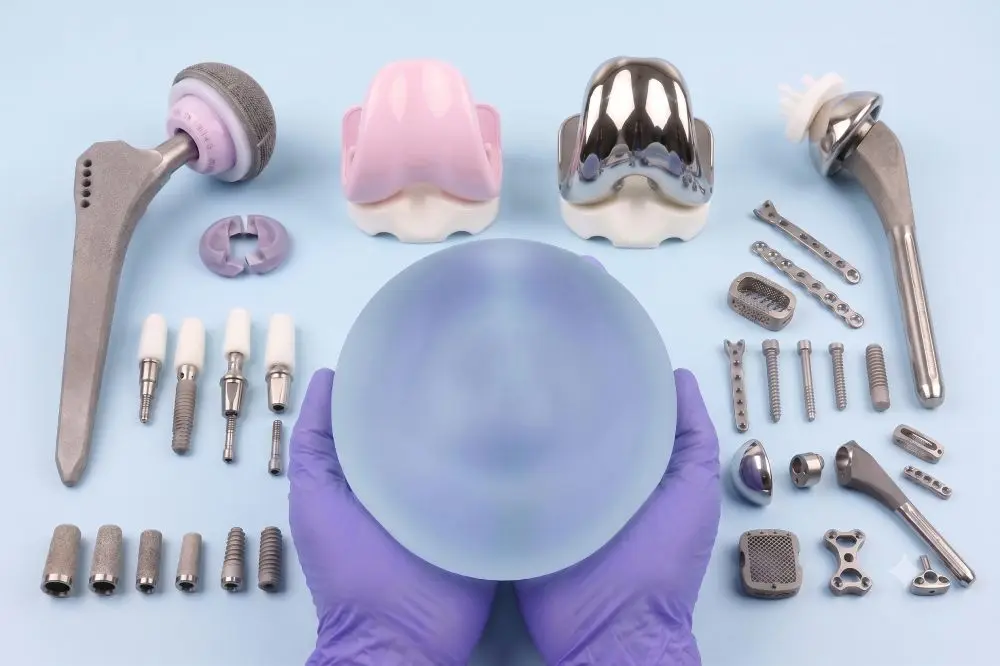
Implant testing is an essential part of the development and regulatory approval of medical implants, ensuring that they meet the highest standards of safety and performance. As an accredited testing laboratory, we support manufacturers with standardized and customized testing concepts throughout the entire product development process.
Implants are tested under realistic conditions to evaluate their behavior under mechanical loading and during long-term use. The objective is to identify potential risks at an early stage and to ensure long-term patient safety.
State-of-the-Art Testing Technology
Owner-Managed & Fast Response Times
Comprehensive Test Reports with Added Value
Sustainable Testing Without Oil Pressure Systems
ISO 14607:2007 – Static Rupture Strength
This test evaluates the amount of force a breast implant can withstand before failure occurs. It simulates extreme loads that should not occur during normal clinical use. The objective is to demonstrate structural safety.
ISO 14607:2024 Annex B – Shell Integrity Testing
This test examines the integrity of the implant shell, particularly regarding defects and material failure. The shell is critical for safety and preventing leakage of the filling material. This test ensures the basic structural stability of the implant.
ISO 14607:2024 Annex C.1 – Fatigue Testing
This test simulates repeated loading over an extended period. It evaluates the long-term durability of the implant structure. The aim is to prevent material failure caused by cyclic loading.
ISO 14607:2024 Annex C.2 – Impact Testing
The implant is subjected to sudden mechanical impacts. This evaluates its resistance to acute mechanical stresses. It is relevant for rare but possible accidental events.
ISO 14607:2024 Annex C.3 – Endurance Fatigue Test / FDA Docket No. 2004D-0124
The implant is subjected to millions of load cycles. The method also considers FDA requirements. The objective is to assess long-term fatigue resistance and structural durability.
ISO 14607:2024 Annex D – Injection Site Testing
This test evaluates the mechanical stability of the filling port or injection site. This area is considered a potential weak point of the implant. The test ensures that leakage does not occur.
ISO 14607:2024 Annex E – Cohesion Testing
This test examines the internal stability of the filling material. In particular, silicone gels are evaluated to determine whether the material remains cohesive. The aim is to prevent gel migration.
ISO 14607:2024 Annex G – Surface Characteristics
This test evaluates the surface structure of the implant. Differences in texture or roughness can influence biological behavior. It is relevant for tissue integration and capsule formation.
ASTM F703 – Gel Bleeding
This standard evaluates the migration of gel components through the implant shell. It is important for the long-term safety of silicone implants. The aim is to minimize material migration.
ASTM F1978 – Abrasion Resistance of Coatings
This standard evaluates the resistance of a coating to mechanical abrasion. It simulates long-term mechanical stress within the body. The objective is to ensure coating integrity.
ISO 13179-1 – Coatings on Implants
This standard defines requirements and test methods for coated implants. It evaluates properties such as adhesion and structural stability. It is essential for functional implant surface coatings.
ASTM F1160 – Coating Testing
This standard examines the mechanical stability of coatings on implants. It is commonly used for adhesion and load testing. The aim is to assess coating reliability.
ASTM F1147 – Tensile Strength of Coatings
This test measures the strength of a coating under tensile stress. It determines when the coating separates from the substrate. It is important for long-term stability.
ASTM F1044 – Shear Strength of Coatings
This standard evaluates resistance to shear forces. It simulates stresses caused by movement and friction within the body. The objective is to prevent delamination.
ASTM F1264 – Intramedullary Nails
This standard describes mechanical testing methods for intramedullary nails. It evaluates bending behavior and fatigue performance. The objective is to ensure stability during fracture treatment.
ASTM F564 – Bone Staples
This standard evaluates the mechanical properties of bone staples. It assesses holding force and elasticity. It is relevant for fixation systems.
ASTM F543 – Cortical Bone Screws
This standard evaluates screws for torsional strength, pull-out resistance, and mechanical strength. It simulates anchoring within the bone. The aim is to ensure secure fixation.
ASTM F384 – Bending Test for Nail Plates
This test evaluates the bending strength of plate-nail systems. It simulates loads occurring during bone healing. The objective is structural stability.
ASTM F382 – Bending Testing of Bone Plates
This standard measures the mechanical load capacity of osteosynthesis plates. It is one of the key testing methods in trauma technology. The aim is to prevent plastic deformation.
IP-05-05 – Fatigue Testing of Sliding Nails
This internal test standard evaluates cyclic loading of sliding nail systems. It simulates dynamic movements during the healing process. The objective is long-term functionality.
This standard evaluates the stability of shoulder glenoid components. It simulates loosening mechanisms within the joint. The objective is to ensure long-term fixation.
ASTM F1829 – Glenoid Shear Test
This test measures the shear strength of glenoid implants. It evaluates stability under lateral forces. The aim is to prevent failure.
This standard measures the fixation strength of modular femoral head components. It evaluates connection security. The objective is to prevent pull-out.
ASTM F1875 – Corrosion Testing of Taper Connections
This test evaluates corrosion in modular connections. It simulates electrochemical influences within the body. The aim is to ensure material stability.
ISO 7206-4 – Fatigue Testing of Hip Stems
This test evaluates the fatigue strength of the femoral stem. It simulates cyclic loading conditions within the body. The objective is long-term stability.
ISO 7206-6 – Fatigue Testing of the Neck Region
This standard evaluates the critical transition area of the hip implant. It assesses the risk of failure under load. The objective is structural safety.
ISO 7206-10 – Static Burst Testing
This test measures the maximum load capacity before failure. It is a limit load test. The objective is to demonstrate safety.
ISO 7206-13 – Head Torsion Testing
This standard evaluates torsional loads on femoral head components. It simulates rotational forces within the joint. The objective is connection stability.
ISO 21535 – Range of Motion (ROM)
This standard evaluates the mobility of hip implants. It simulates physiological joint movements. The objective is functional performance.
ASTM F1820 – Insert Push-Out Test
This standard measures the retention strength of inserts in implant systems. It evaluates mechanical fixation. The objective is to prevent loosening.
This test simulates long-term loading conditions within the knee joint. It evaluates the fatigue strength of the implant. The objective is to ensure safe functionality over many years.
ASTM F3210 – Fatigue Testing of Femoral Components
This standard evaluates the cyclic load capacity of femoral implants. It simulates long-term mechanical stresses within the knee joint. The objective is structural fatigue resistance.
This standard describes mechanical testing methods for intervertebral systems. It evaluates compression, tensile, and shear forces. The objective is to ensure fusion stability.
ASTM F1717 – Corpectomy Model
This test simulates an unstable spine with an implant. It evaluates stabilization provided by fixation systems. The objective is structural safety.
ISO 14801 – Fatigue Testing of Endosseous Implants
This standard evaluates dental implants under oblique loading conditions. It simulates realistic chewing forces. The objective is to assess long-term fatigue strength.
ISO/TS 13498 – Torsional Testing of Endosseous Implants
This test evaluates the torsional strength of implants. It simulates rotational loads within the bone. The objective is to ensure secure fixation.
ISO/TR 18130 – Implant–Abutment Torsion
This standard evaluates the connection between the implant and the abutment. It measures torsional stability. The objective is to prevent loosening.
ISO 22683 – Implant–Abutment Rotational Fit
This test evaluates the precision of the implant–abutment connection. It measures micromovements. The objective is mechanical accuracy.
ISO 11953 – Torque Wrench Testing
This standard evaluates surgical torque wrenches. It assesses accuracy and repeatability. The objective is to ensure safe application.

Customized Testing for Medical Implants
In addition to standard-based testing, customized, product-specific test concepts for implants are becoming increasingly important. They enable the targeted evaluation of specific designs, materials, and clinical requirements that cannot be fully addressed by standards alone. This results in testing strategies precisely tailored to the respective product and its risk profile.
One example is breast implant-specific material testing, which is designed to address the unique properties of silicone implants. This includes shape stability testing, which evaluates whether the implant maintains its geometry under mechanical stress. In addition, peel testing between the filler material and the shell assesses the adhesion strength between the outer shell and the filling material to prevent delamination.
Gel fracture testing under compression examines the behavior of the filling material under mechanical load, while gel filling properties such as cohesion and stability are evaluated. Furthermore, individual testing programs can be developed for each implant according to customer-specific requirements. This allows specific needs to be addressed precisely and further enhances the safety and performance of medical products.
Failure Analysis of Implants
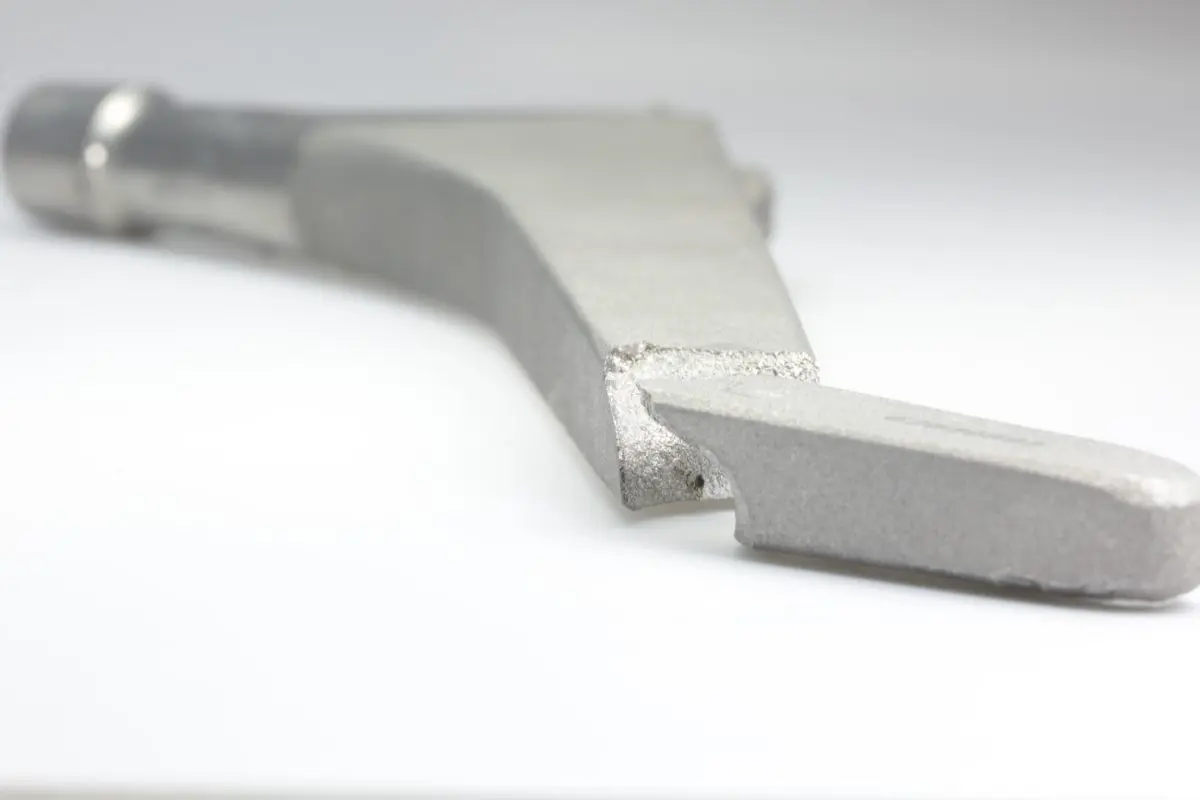
In addition to mechanical and standard-based testing, INNOPROOF also offers comprehensive failure analysis for implants. Damaged or failed implants are systematically examined to identify the root cause of failure. The objective is to distinguish between material-related, design-related, manufacturing-related, or application-related causes.
The analyses include macroscopic and microscopic examinations as well as material and mechanical evaluations. Based on these investigations, failure mechanisms can be understood and targeted improvements can be derived for future product generations. Failure analysis therefore makes a significant contribution to quality assurance and the further development of implant systems.

What Role Do Standards Play in Implant Testing?
For manufacturers, standards are an essential part of the regulatory approval process, as they support the requirements of authorities such as the FDA and the EU MDR. At the same time, they reduce risks by defining established test methods for different implant types and helping to identify potential weaknesses at an early stage.
Despite their importance, standards do not always cover all specific design features of modern implants. Therefore, they are often supplemented by customized testing concepts to evaluate product-specific characteristics under realistic conditions. Standards provide the foundation, while tailored testing methods serve as the necessary complement for innovative medical technology.
At INNOPROOF, we follow a clearly structured and fully traceable process for the testing of medical implants. The objective is to generate reproducible results that meet regulatory requirements while reliably supporting product development.
High-Precision Testing Technology for Demanding Implant Testing
At INNOPROOF, we rely on state-of-the-art testing systems specifically designed for the mechanical characterization of implants. With advanced test platforms such as the Instron ElectroPuls E3000, we can realistically reproduce dynamic loads, fatigue behavior, and complex load profiles. This enables reliable and reproducible results under standardized yet application-oriented conditions.
Direct Communication & Short Response Times
As an owner-managed testing laboratory, we operate without unnecessary hierarchies and provide clear points of contact for every project. This enables fast decision-making, direct coordination, and close support throughout the entire testing process. Our customers benefit from efficient and transparent collaboration from the initial inquiry through to the final report.
Clear & Reliable Result Documentation
The results of our implant testing are prepared in structured and technically precise reports. Through the clear presentation of measurement data, diagrams, and test results, we create traceable documentation suitable for both product development and regulatory submissions. This makes complex test results understandable and directly usable.