
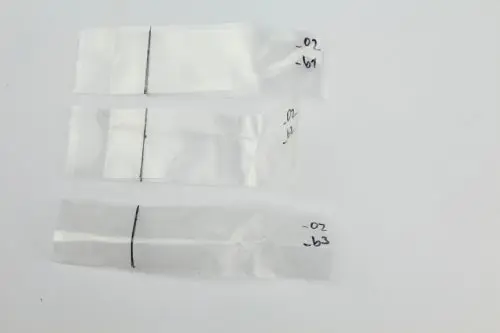
ASTM F88 seal strength test*
 The seal strength of the packaging seam is tested in a tensile test. The packaging is cut into samples of defined size. Both ends of the seal are clamped, with one of three clamping configurations selected depending on the type of seal. The specimen is statically loaded at 200 to 300 mm/min until seal failure occurs. Only results obtained using the same clamping configuration may be compared.
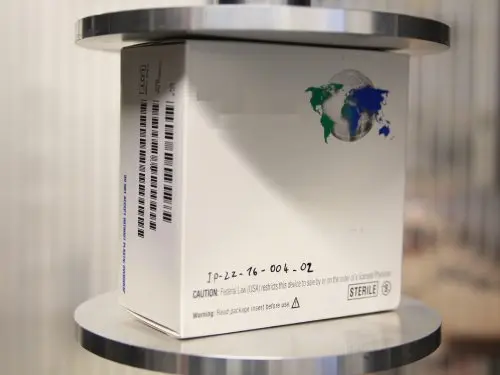
 Packaging is tested under compression according to ASTM D642 in order to simulate transportation or storage conditions. The packaging sample is placed between two horizontal plates and subjected to static loading. The test is terminated when a specified deformation is reached or when a drop in reaction force occurs. The maximum applied test force and the corresponding deformation of the packaging are recorded.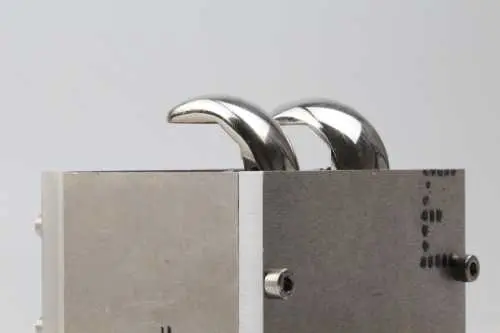
 In March 2022, ASTM published the standard for fatigue testing of the femoral component of knee replacements. This standard complements the fatigue testing of tibial plateaus according to ISO 14879-1 and is the first published standard specifically addressing the fatigue strength of the femoral component.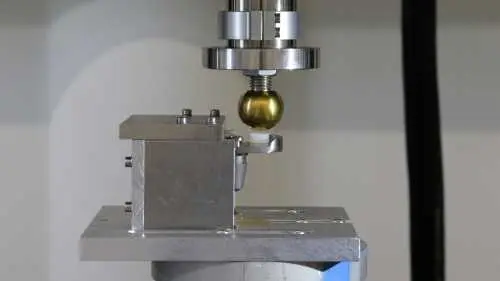
 This fatigue test is applied to bicondylar knee replacements and specifically targets the metallic tibial plateau (tibial tray). For the test, the plateau is embedded on one side (medial or lateral), while the other side is free to flex. The fatigue strength of the tibial plateau is evaluated under specified cyclic loads and numbers of cycles.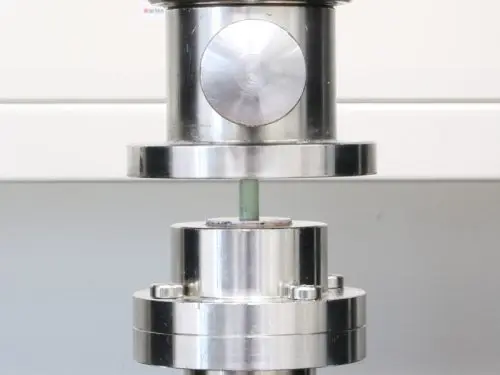
 ISO 5833 specifies, among other things, compression and bending tests for bone cement specimens. We offer static compressive strength testing and static bending strength testing as testing services. For bending strength determination, a four-point bending test is performed. If required, bone cement specimens can be manufactured in our laboratory using our own standard-compliant casting molds.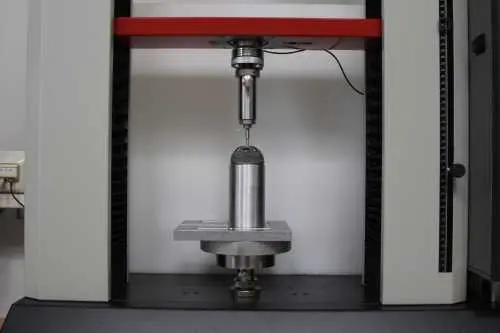
 This test evaluates the fixation of inserts in the acetabular shell to compare the effectiveness of different insert fixation mechanisms. It includes three different tests. The shell is fixed in all tests using a suitable fixture to prevent movement of the shell while allowing the insert to be released. Before each test, the insert is fixed in the shell with a force of 2000 N (ASTM F2345).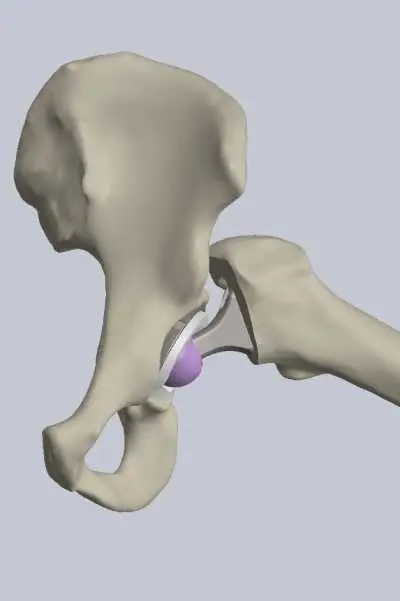
 The procedure specified in ISO 21535 measures the range of motion (ROM) of hip replacements. This can be performed either on the actual component or within a CAD environment. The ranges of motion up to impingement are measured in the directions of flexion/extension, adduction/abduction, and internal/external rotation.